Canada at the FIFA Men’s World Cup: A Quick History
In a matter of weeks, the Canadian Men’s National Soccer Team will embark on its 3rd World Cup campaign. It will be forty years after its first. Of course, this time, Canada has the honor of being a co-host of what is both literally and figuratively the biggest tournament in the history of international soccer. It is a big opportunity for soccer to gain a foothold in a country that hasn’t always embraced it with gusto.
Canada’s relationship with the FIFA World Cup stretches back to 1958. The country did not enter the previous World Cup qualifiers from the 1934 World Cup (the first World Cup in 1930 was invite-only) onwards, so the 1958 tournament in Sweden was the first attempt at appearing on the grand stage.
Canada whipped the US in 1957
It was far from a disaster – Canada won two of its four games, finishing second in its qualifying group behind a very talented Mexico team. If you’re a fan of having friendly sporting rivalries with Canada’s immediate southern neighbor, you’ll be glad to know that the campaign also saw Canada thrash the United States 5-1 in the Varsity Stadium in Toronto. The Canadian team also traveled to the US for the return fixture, winning 3-2 in St Louis. Just 1,500 people were in attendance, which tells you a lot about the popularity of soccer in North America at the time.
1986 offered a big moment. The qualification system was different compared to today, with Canada qualifying by way of winning the CONCACAF Cup. The team was excellent throughout, going unbeaten across the tournament. The place in the 1986 World Cup felt well-earned.
1986 was a tough introduction to the top table
The 1986 World Cup in Mexico is fondly remembered by global soccer fans, not least because it truly introduced the legendary Diego Maradona to the pantheon of sporting greatness. It was the Hand of God and the genius of the Argentine that became the story of the tournament. For Canada, well, it was disappointing. Three games, three losses, zero goals scored. Yet, Canada came up against some very good teams, including the legendary France team of Platini and Papin, who struggled to break down the Canadian defense in a dogged 1-0 victory.
Canada was unlucky not to qualify for a few more World Cups, particularly in the mid-1990s, but there was a dip in results across the mid-2000s before the reboot that has led to a more optimistic feeling about Canadian men’s soccer today. The team as we know it today really came of age in the qualification campaign for Qatar 2022, winning 14 games across the qualifiers and looking like a team that had earned its place at the top table.
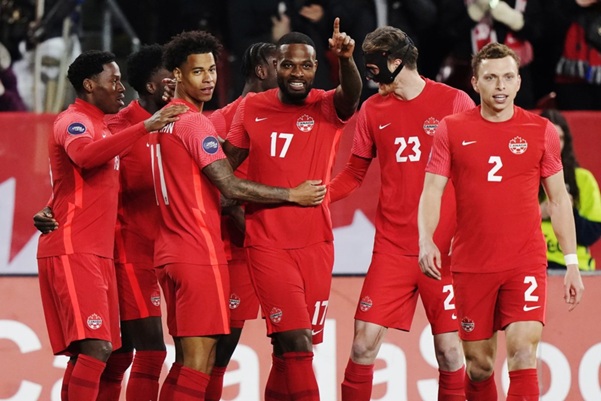
People often remark on how the world has changed from the 1980s to now. We are, of course, connected to technology like never before. You’ll likely have a device in your pocket that lets you do everything from sending an email to testing you heartrate to playing an online slot game. Yet, the changes in the Canadian soccer team have been just as stark. There is a difference in the professionalism. Many of the players ply their trade in Europe. The makeup of the team is more cosmopolitan. It’s an exciting time.
Marsch will build upon the lessons of 2022
Many of the players who played the 2022 World Cup are still with the squad, and they will hope to do better in 2026 than the 0-3 record in Qatar, which makes it 0-6 in official World Cup games for Canada. That said, the opportunity is now there to redress that balance in a few weeks.
Canada will open the tournament against Bosnia and Herzegovina on June 12th. And here’s what will be surprising if you were to explain it to the fans in 1986 or 1958: Canada is listed as the favorite to win the game. It looks almost impossible that Canada will go on and win the World Cup – let’s be clear about that – but that’s not the measure of success that coach Jesse Marsch will be looking for. He will be looking for progress: A first win, and then, hopefully, another against Qatar or Switzerland, and on to the knockout rounds of a men’s World Cup for the first time in the nation’s history.
Leave a Reply